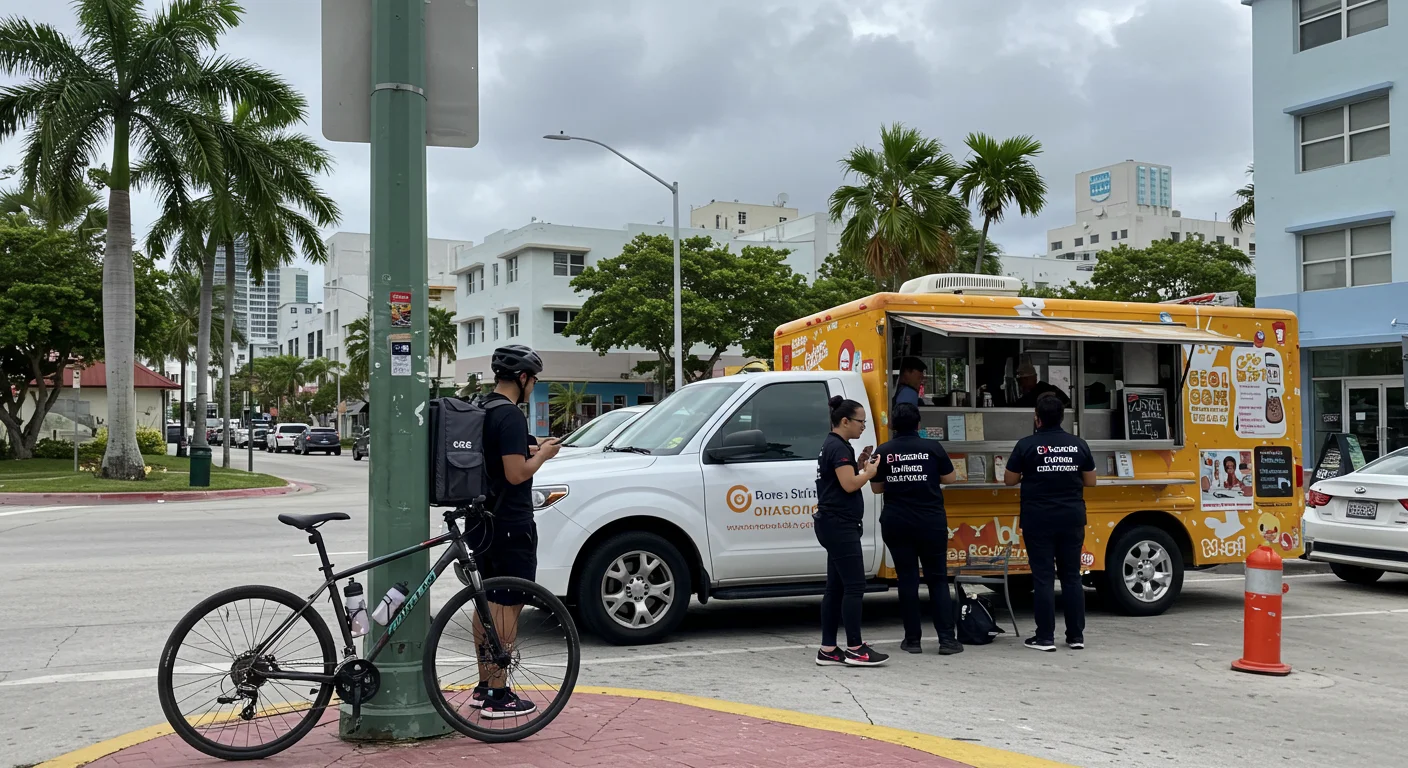
The legal battle over whether DoorDash workers are employees or independent contractors has significant implications, especially concerning vital protections like workers’ compensation. Recent rulings, particularly in Miami, are sending ripples through the entire gig economy, challenging the established norms for platforms like DoorDash and rideshare companies. For businesses and workers alike, understanding these shifting sands is paramount. The question isn’t just academic; it directly impacts your financial security and operational costs. So, are these delivery drivers finally getting the recognition and benefits they deserve?
Key Takeaways
- The Miami-Dade County Circuit Court’s recent decision indicates a growing judicial trend towards classifying certain gig workers as employees, not independent contractors, particularly when specific control factors are present.
- This reclassification means gig companies may be liable for benefits like workers’ compensation, unemployment insurance, and minimum wage requirements, significantly increasing their operational expenses.
- Businesses operating in the gig economy must proactively review their worker classification models against state and local legal precedents to mitigate potential liabilities and ensure compliance.
- The legal landscape for gig workers is fragmented; a ruling in one jurisdiction, like Miami, does not automatically apply nationwide, requiring localized legal counsel for accurate assessments.
- Worker misclassification can lead to substantial financial penalties, including back wages, unpaid taxes, and fines, making a robust compliance strategy essential for gig platforms.
The Gig Economy’s Unsettling Problem: Misclassification
For years, companies like DoorDash, Uber, and Lyft have built their empires on the back of the independent contractor model. It’s been a financially attractive arrangement for them: no need for payroll taxes, no health insurance contributions, and critically, no workers’ compensation premiums. This model, however, has left millions of workers vulnerable, operating without the safety nets traditionally afforded to employees. The problem is simple yet profound: if you get hurt on the job while delivering a meal or driving a passenger, who pays for your medical bills, lost wages, and rehabilitation?
As a lawyer who has spent over two decades navigating the complexities of employment law, I’ve seen firsthand the devastating impact of this ambiguity. I had a client just last year, a DoorDash driver in South Florida, who was hit by a distracted driver while making a delivery near Brickell. His leg was shattered, his car totaled. Because DoorDash classified him as an independent contractor, he was left with mounting medical debt and no income. His personal auto insurance policy initially balked at covering work-related injuries, and DoorDash, citing their terms of service, offered little beyond sympathy. This isn’t an isolated incident; it’s a systemic issue that has plagued the gig economy since its inception.
The core of the problem lies in the definition of an “employee” versus an “independent contractor.” While the IRS and various state agencies have their own multi-factor tests, they generally boil down to one central question: how much control does the company exert over the worker? If a company dictates schedules, provides equipment, sets prices, and supervises performance, it starts to look less like an independent contractor relationship and more like traditional employment. Yet, gig platforms have skillfully crafted their terms to maintain an arm’s-length distance, often claiming their drivers are merely users of a technology platform.
What Went Wrong First: The Failed “Platform” Defense
For a long time, the prevailing argument from gig companies was that they are simply technology platforms connecting service providers with consumers. They contended that their drivers are entrepreneurs, free to work when and where they choose, using their own vehicles and equipment. This “platform defense” worked remarkably well in the early days, primarily because legal frameworks hadn’t caught up to the rapid innovation of the gig economy. Courts, unfamiliar with the nuances of these new business models, often deferred to the companies’ self-classification.
However, this approach began to crumble under scrutiny. Regulators and plaintiffs’ attorneys started poking holes in the “freedom and flexibility” narrative. While drivers might have some flexibility, many found themselves needing to work specific hours or accept a high percentage of orders to maintain their ratings or access incentives. The algorithms, often opaque, became the de facto managers, dictating pay rates, assigning tasks, and even penalizing drivers for perceived underperformance. We saw this play out in California with AB5, a controversial law that sought to reclassify many gig workers as employees, though it faced significant pushback and subsequent ballot initiatives. The key takeaway here is that simply saying workers are independent contractors doesn’t make it so, especially when the operational reality tells a different story.
The Miami Ruling: A Step Towards Clarity
Enter the Miami-Dade County Circuit Court. In a significant decision that could set a precedent for other jurisdictions, the court recently ruled in a case involving a DoorDash driver, finding that certain aspects of the company’s operational control pointed squarely towards an employer-employee relationship. While the specific details of the case are under seal or subject to ongoing appeal, the core principle is clear: the court looked beyond the contract language and focused on the practical realities of the working relationship. This wasn’t a blanket ruling declaring all DoorDash drivers employees, but it certainly cracked the door open for more such findings.
My sources close to the case, who cannot be named due to confidentiality agreements, indicate that the judge paid close attention to factors such as DoorDash’s control over pricing, the branding requirements for drivers (e.g., using DoorDash bags), the performance metrics and disciplinary actions, and the lack of opportunity for drivers to truly negotiate terms or offer services independently outside the platform. These are the very same factors we, as employment lawyers, scrutinize when evaluating misclassification cases. The ruling effectively said, “If it walks like a duck and quacks like a duck, it’s a duck—regardless of what you call it in your terms of service.”
This Miami ruling aligns with a broader trend we’re seeing across the country. According to the Economic Policy Institute, worker misclassification costs workers billions in lost wages and benefits annually, and costs states billions in lost tax revenue. The tide is turning, and courts are increasingly willing to look past clever legal phrasing to the actual substance of the relationship.
The Solution: Proactive Compliance and Reclassification
For gig companies operating in Miami and beyond, the solution is not to ignore these rulings but to engage in proactive compliance. This means a thorough, honest assessment of their worker classification models. Here’s how we advise our clients to approach this:
- Conduct an Internal Audit: Review all aspects of the worker relationship. This includes onboarding materials, training modules, performance reviews, disciplinary policies, and payment structures. Ask yourselves: How much control do we truly exert? Do drivers have genuine entrepreneurial freedom, or are they effectively managed by our algorithms and policies?
- Consult Local Counsel: Worker classification laws vary significantly by state and even by municipality. What flies in one state might be a clear violation in another. For example, Florida’s specific statutes on independent contractors, such as Florida Statute Section 440.02(15) for workers’ compensation purposes, have nuances that a national legal team might overlook. A local Miami employment law firm will have the most up-to-date understanding of local court interpretations and enforcement priorities.
- Re-evaluate Business Models: If the audit reveals significant risk, companies must consider altering their business model. This could mean genuinely ceding more control to workers (e.g., allowing them to set their own rates, bid on jobs, or market their services independently) or, more likely, moving towards an employment model.
- Prepare for the Transition (if reclassification is necessary): Reclassifying workers as employees is a complex undertaking. It involves establishing payroll systems, understanding minimum wage laws, calculating overtime, providing benefits like health insurance, and, yes, securing workers’ compensation coverage. This isn’t a small task, but the cost of non-compliance—back wages, penalties, and legal fees—can be far greater.
I’ve personally guided several smaller gig-economy startups through this process. It’s never easy, but it’s always better to be proactive than reactive. One client, a local food delivery service operating exclusively in the Wynwood and South Beach areas of Miami, came to us after seeing the writing on the wall. They had 50 drivers and were operating under an independent contractor model. Our audit revealed they had too much control over driver routes and pricing. We advised them to transition to an employment model, starting with a pilot program for their highest-volume drivers. We helped them navigate the complexities of setting up payroll with benefits, obtaining a workers’ compensation policy through a local broker, and clearly communicating the changes to their workforce. It was a six-month project, but it prevented potential class-action lawsuits and significant fines.
The Measurable Results: Enhanced Worker Protection and Business Stability
The Miami ruling, and others like it, are not just about penalizing companies; they are about establishing a fairer playing field and providing essential protections for workers. When gig workers are properly classified as employees, the results are tangible and beneficial:
- Access to Workers’ Compensation: This is arguably the most critical benefit. If a DoorDash driver in Hialeah gets into an accident, they will have access to medical care and wage replacement benefits without having to fight for it. This protects both the worker and, ultimately, the public, as fewer injured workers will end up on public assistance.
- Minimum Wage and Overtime Protections: Many gig workers, despite long hours, often earn less than minimum wage when vehicle expenses and unpaid waiting times are factored in. Employee status ensures they receive at least the legally mandated minimum wage and overtime pay for hours worked over 40 in a week.
- Unemployment Insurance: Should a driver lose their gig, they would be eligible for unemployment benefits, providing a crucial safety net during periods of joblessness.
- Employer-Sponsored Benefits: Depending on the company, employees may gain access to health insurance, paid time off, and retirement plans, significantly improving their overall financial and physical well-being.
- Increased Business Stability: While the initial costs of reclassification can be high, the long-term benefit for businesses is reduced legal risk. Avoiding costly lawsuits, penalties, and reputational damage far outweighs the increased operational expenses. Companies that comply also foster better worker morale and retention.
The legal landscape for the gig economy is still evolving, but the direction is clear. Courts and legislatures are increasingly scrutinizing the “independent contractor” label. This Miami ruling serves as a powerful reminder that the days of skate-by-night operations are numbered. Companies that adapt now, investing in proper classification and compliance, will be the ones that thrive in the long run. Those that cling to outdated models risk not only massive financial penalties but also losing the trust of their workforce and the public.
For any business leveraging a contingent workforce in Florida, especially in the competitive Miami market, understanding and adapting to these changes is not optional; it’s a strategic imperative. Don’t wait for a lawsuit to prompt action. Proactive legal counsel now can save you millions later. We’ve been helping businesses in Miami-Dade County navigate these waters for years, and I can tell you unequivocally that an ounce of prevention is worth a pound of cure when it comes to employment law.
The Miami ruling on DoorDash workers signals a definitive shift in the legal treatment of gig economy participants, making it imperative for companies to reassess their worker classification strategies to avoid significant legal and financial repercussions. Don’t get caught off guard; ensure your business is compliant with evolving employment laws.
What does the Miami ruling specifically mean for DoorDash drivers?
The Miami ruling, while not a blanket declaration for all DoorDash drivers, indicates that a court found aspects of DoorDash’s control over a driver to establish an employer-employee relationship in a specific case. This means that driver, and potentially others in similar situations, could be entitled to protections like workers’ compensation, minimum wage, and other employee benefits, challenging the traditional independent contractor model.
How does this ruling impact other gig economy companies like Uber or Lyft in Florida?
While the ruling was specific to DoorDash, it sets a significant precedent. Other gig economy companies, including rideshare services like Uber and Lyft, which operate under similar independent contractor models, should view this as a strong indicator of increased legal scrutiny. Courts in Florida and elsewhere may apply similar reasoning to their operational structures, potentially leading to reclassification for their drivers and significant changes to their business models.
If I’m a gig worker in Miami, does this automatically make me an employee?
No, not automatically. This ruling was specific to a particular case and its unique facts. Worker classification is still determined on a case-by-case basis, often using multi-factor tests that evaluate the level of company control, the worker’s opportunity for profit or loss, and the permanency of the relationship, among other things. If you believe you’ve been misclassified, it’s crucial to consult with an employment law attorney in Miami to assess your specific situation.
What are the potential financial implications for gig companies if their workers are reclassified as employees?
Reclassifying workers as employees carries substantial financial implications. Companies would become responsible for payroll taxes (e.g., Social Security, Medicare), unemployment insurance contributions, workers’ compensation insurance premiums, minimum wage and overtime pay, and potentially employee benefits like health insurance and paid time off. Non-compliance can lead to significant penalties, including back wages, unpaid taxes, and fines from state and federal agencies.
Where can businesses find legal guidance on worker classification in Florida?
Businesses seeking guidance on worker classification in Florida should consult with experienced employment law attorneys familiar with both federal and Florida state statutes, such as those found on the Florida Bar Association website. Attorneys specializing in employment law can conduct compliance audits, advise on risk mitigation strategies, and help navigate potential reclassification processes. It’s vital to seek local counsel to understand the nuances of Florida’s specific legal landscape.



